Back to AI News

Google’s AI Layer Starts Taking Over

Google’s AI Layer Starts Taking Over

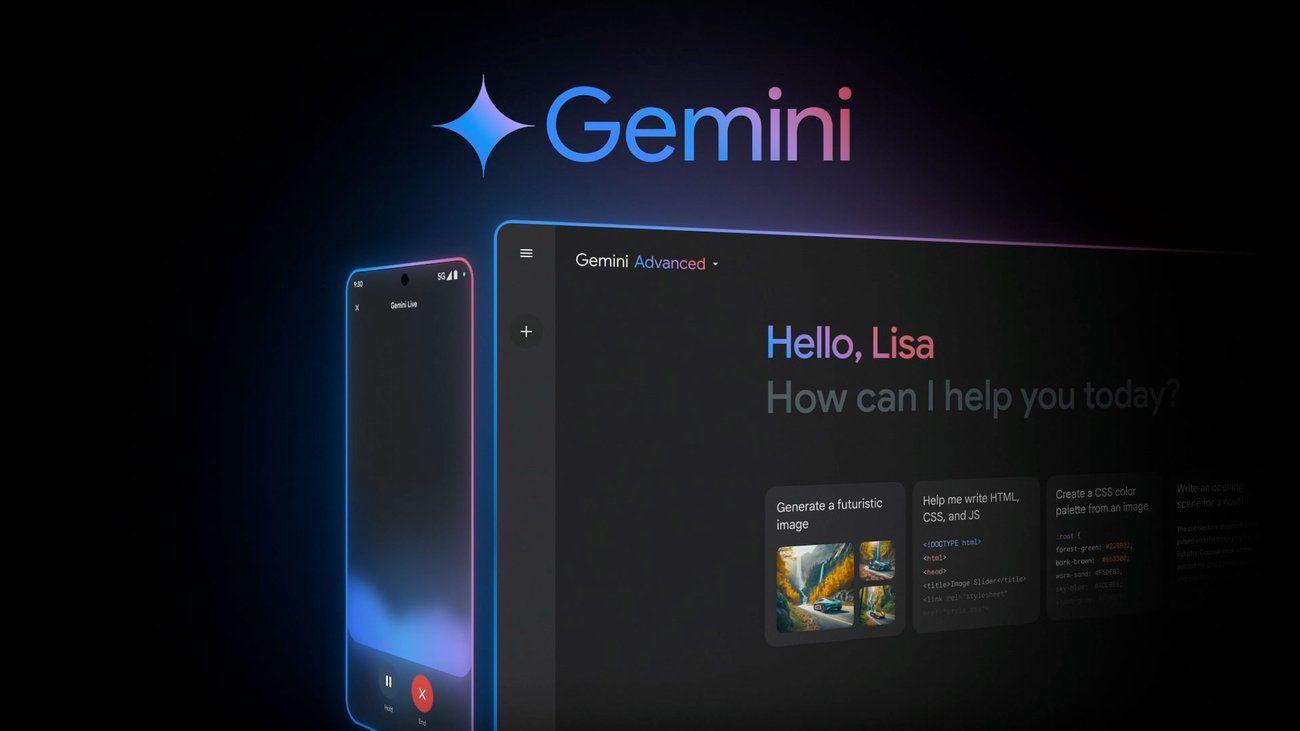
Google spent the days before I/O 2026 dropping update after update, and the bigger picture is starting to become obvious. Instead of treating Gemini like a separate chatbot, Google is turning it into an AI layer that sits underneath everything — Android, laptops, apps, and even how users interact with their devices.

One of the most interesting launches is Gemini Intelligence, which can handle tasks across apps without constantly switching between them. Google also introduced “Magic Pointer,” a new way of interacting with Gemini through gestures, motion, and voice instead of traditional clicks. At the same time, DeepMind spinout Isomorphic Labs secured a massive funding round to continue its AI-driven drug discovery work, showing how Google’s AI ecosystem is expanding far beyond consumer products into healthcare and scientific research.

Max's Opinion

Google’s strategy suddenly feels much more ambitious than just competing with ChatGPT. They’re trying to weave AI directly into the operating system itself, which could make Gemini feel less like an app and more like part of the device. If they pull that off, it could seriously change how people use computers and phones.

The AI Compute Power Play

The AI Compute Power Play

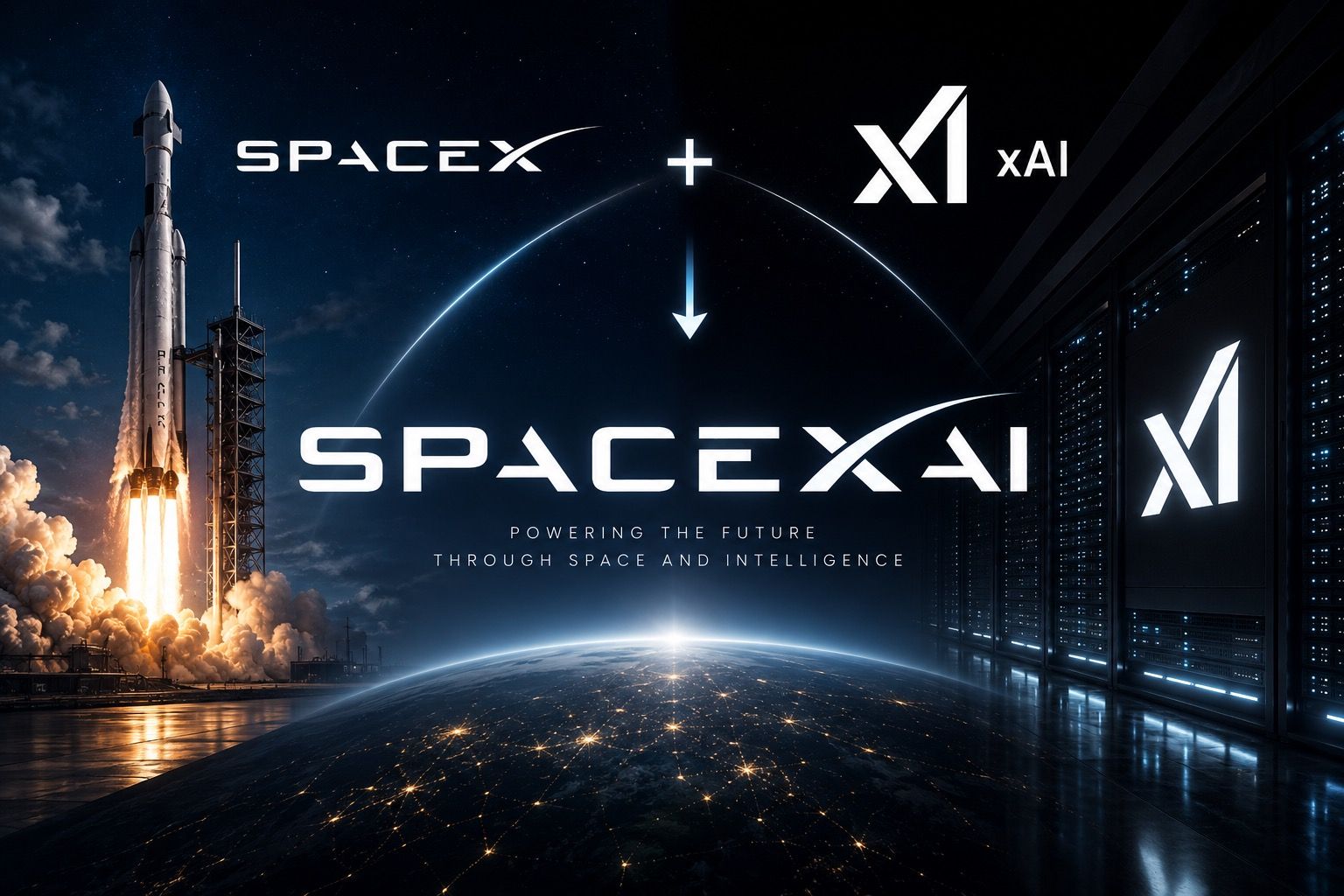
SpaceXAI just made one of the biggest infrastructure deals in AI so far. After SpaceX absorbed xAI earlier this year, the newly combined company signed a massive agreement with Anthropic that basically hands over the entire compute capacity of the Colossus 1 data center to power Claude. That means hundreds of thousands of NVIDIA GPUs and an enormous amount of energy capacity are now focused almost entirely on AI inference.

The move also explains why Anthropic suddenly increased usage limits across Claude products. With far more compute available, the company can support bigger workloads without the same bottlenecks as before. At the same time, the deal is financially smart for SpaceXAI because Colossus 1 was no longer their main training cluster after shifting to the even larger Colossus 2 system. Instead of leaving that infrastructure underused, they’re turning it into a huge source of recurring revenue while continuing to expand their AI ambitions.

Max's Opinion

This whole situation shows how important raw computing power has become in AI. It’s not just about building better models anymore — it’s about who controls the infrastructure behind them. The scale of these GPU clusters is honestly hard to even imagine, and it feels like AI companies are starting to operate more like energy or telecom giants.

OpenAI Breaks Out of the Cloud Cage

OpenAI Breaks Out of the Cloud Cage

OpenAI spent the week reshaping how its technology gets distributed and integrated across the cloud industry. The biggest shift came from changes to its partnership with Microsoft, which now gives OpenAI much more freedom to sell its models across different cloud providers instead of being tied mainly to Azure. That’s a pretty major move because it opens the door for OpenAI to become available almost everywhere enterprises already operate.

At the same time, OpenAI expanded aggressively into Amazon’s ecosystem by bringing its frontier models and managed agents to AWS Bedrock. On top of that, the company open-sourced a system called Symphony, designed to coordinate autonomous AI agents through tools like issue trackers and development workflows. Altogether, the updates show OpenAI moving beyond just building models and focusing more on becoming the infrastructure layer behind future AI-powered work.

Max's Opinion

OpenAI’s strategy is starting to look way bigger than just ChatGPT. Instead of competing only on models, they’re trying to become deeply integrated into how companies already build software and manage workflows. If they pull this off, OpenAI could end up becoming part of the backbone of enterprise AI.

New Phishing Wave Targeting German SMEs (TEST)

New Phishing Wave Targeting German SMEs (TEST)

In May 2026, the BSI warns of a targeted phishing campaign aimed at small and medium-sized enterprises in Germany. Attackers use deceptively authentic emails under the guise of Microsoft 365 to steal login credentials. This article is an automated pipeline test.

Max's Opinion

Phishing remains a persistent threat, especially for SMEs with limited cybersecurity resources. Awareness and multi-factor authentication are critical defenses.

Claude Expands Beyond the Chat Window

Claude Expands Beyond the Chat Window

Anthropic spent this week pushing Claude far beyond being just a chatbot. Instead of focusing on one big flashy release, they rolled out a bunch of upgrades that make Claude more connected to real workflows, developer tools, and even everyday consumer apps. The overall direction is pretty obvious: Claude is turning into something that lives across your whole digital environment instead of sitting in a single chat window.

One major addition is live artifacts inside Cowork, where Claude can build dashboards and trackers that stay connected to apps and files with constantly updated data. Developers also gained a new memory system for managed agents, allowing AI systems to remember information across sessions in a way that’s editable, exportable, and easier to control. On top of that, Claude now integrates with a huge list of consumer services like Spotify, Uber, Booking.com, and Instacart, making it much more useful outside of work-focused tasks.

Max's Opinion

Anthropic’s updates feel less flashy than some other AI launches, but honestly they might matter more long term. Instead of just making Claude “smarter,” they’re making it more connected and practical. If AI assistants keep integrating into apps like this, they could start feeling more like operating systems than chatbots.

Google’s AI Push Hits Every Device

Google’s AI Push Hits Every Device

Google is rolling out Gemini updates at an almost ridiculous speed right now. Between a new top-performing text-to-speech model and the launch of a native Mac app, it’s obvious they want Gemini to be everywhere at once — from developer tools to everyday desktop use.

One of the biggest launches is Gemini 3.1 Flash TTS, which now ranks at the top of major text-to-speech leaderboards. The system can control tone, pacing, accents, and emotions directly through prompts, making AI voices sound way more natural and expressive. At the same time, Google finally released a native macOS app for Gemini with live screen sharing and file context support, which makes the assistant feel much more integrated into actual workflows instead of just being another browser tab.

Max's Opinion

Google’s strategy right now seems to be pure scale. They’re pushing Gemini into as many areas as possible at the same time, and honestly, it’s starting to feel unavoidable. The voice improvements are especially impressive because AI speech is finally getting close to sounding genuinely natural.

When Rivals Start Working Together

When Rivals Start Working Together

Some of the biggest names in AI — OpenAI, Anthropic, and Google — are starting to collaborate in a way that would’ve seemed unlikely not long ago. Through the Frontier Model Forum, they’ve begun sharing information to detect and respond to competitors trying to extract capabilities from their models. The focus is on protecting their most advanced systems from being copied or reverse-engineered.

A major concern is something called adversarial distillation, where outputs from powerful models are used to train smaller, cheaper versions. According to reports, this has already cost US AI companies billions in potential revenue. Anthropic even tracked millions of suspicious interactions and thousands of fake accounts linked to specific organizations. What makes this situation stand out is that this isn’t just discussion anymore — it’s an active intelligence-sharing effort between companies that are usually direct competitors.

Max's Opinion

It’s kind of surprising to see companies like this actually work together, even if it’s for protection. At the same time, it shows how serious the competition in AI has become. If rivals are teaming up, it probably means the stakes are way higher than most people realize.

Google Opens the Gates

Google Opens the Gates

Google just had one of its biggest AI release weeks in a while, and the direction is pretty clear: more openness and more real-world integration. With the launch of new open models and updates to everyday tools like Gmail, the company is trying to reach both developers and regular users at the same time.

One major step is the release of Gemma 4, a set of open models built on the same research as Gemini 3. These models range from lightweight versions that can run directly on devices to larger ones that compete surprisingly well with much bigger systems. On top of that, Google is making them easier to use commercially by removing previous licensing restrictions. At the same time, the new AI-powered Gmail inbox shows how this tech is moving into daily workflows, replacing simple unread counters with summaries, priorities, and task suggestions generated directly from your emails.

Max's Opinion

Google seems to be shifting toward a more open strategy, which could make a big difference for developers. The mix of powerful models and practical features like the AI inbox makes this feel less like a research update and more like something people will actually use. The pricing and accessibility will probably decide how big this really becomes.

Building AI From the Ground Up

Building AI From the Ground Up

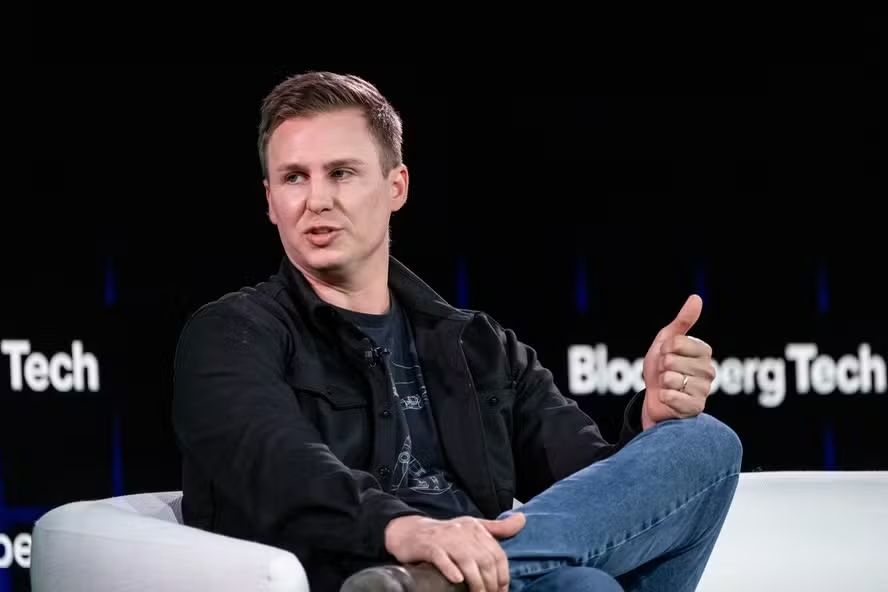
Brett Adcock, known for founding Figure AI, is back with a new project called Hark, and he's going all in. Backed by $100 million of his own money, the goal is to build what he calls "the most advanced personal intelligence in the world." Instead of launching a single product, Hark is aiming to build an entire AI system from scratch.

What makes Hark stand out is how broad the approach is. Rather than focusing on just software or models, the team is working on everything at once — foundation models, software, and custom-built hardware, all designed to work together as one system. The team itself is stacked, with talent coming from companies like Apple, Google, Tesla, and Amazon. On top of that, the timeline is aggressive, with plans to deploy large-scale GPU infrastructure soon and release their first models within months, followed by dedicated hardware shortly after.

Max's Opinion

This is one of those projects that feels super ambitious right from the start. Building everything at once instead of focusing on one area is risky, but it could also be what makes it stand out. The timeline seems really fast though, so the real question is whether they can actually deliver on all of this.

Anthropic claws back

Anthropic claws back

Anthropic just dropped a bunch of new features in a really short time, and it honestly feels like they're trying to catch up fast. With updates like Dispatch, Claude Code Channels, and Projects in Cowork, they're basically building their own version of an AI agent system that can handle real tasks across devices. Instead of just chatting with Claude, the focus is clearly shifting toward letting it actually do work in the background.

One of the most interesting parts is how connected everything is becoming. You can message Claude from your phone while it works on your desktop, assign tasks like organizing files or writing reports, and then come back later to finished results. Developers can even interact with Claude Code through apps like Telegram or Discord, which makes it feel more like texting a coworker than using a tool. On top of that, Projects brings everything into one place, keeping files, instructions, and context organized locally, which also adds a layer of privacy.

Max's Opinion

This feels like Anthropic is really trying to compete directly with the whole "AI agent" trend. The idea of just texting your AI and letting it handle stuff in the background is super convenient. At the same time, it also feels like things are getting more complex, so it'll depend on how smooth and reliable all of this actually works.

The Billion-Dollar Push Beyond Chatbots

The Billion-Dollar Push Beyond Chatbots

Yann LeCun is starting fresh with a new company called AMI Labs, and the scale of it is already huge. They secured over $1 billion in funding right away, even though there's no product yet. Instead of building another chatbot, the goal is to rethink how AI systems work at a much deeper level.

The focus is on something called "world models." Instead of predicting the next word like most current AI systems, these models aim to understand how things change over time and how different factors influence each other. That would make AI less about generating text and more about actually understanding cause and effect. Even without a clear business model yet, major players like NVIDIA are backing the idea, which shows how much confidence there is in this direction.

Max's Opinion

This comes across more like a long-term research bet than a normal startup. Moving beyond next-word prediction sounds important, but it's also pretty uncertain. It could either lead to a completely new type of AI or take years before anything practical comes out of it.

OpenAI Bites Back

OpenAI Bites Back

OpenAI just released GPT-5.4, and it looks like they're trying to push their models further into real professional work. Instead of focusing on one specific ability, GPT-5.4 combines reasoning, coding, and agent-style workflows into a single system designed to handle complex tasks from start to finish. The idea is basically that AI shouldn't just answer questions anymore — it should be able to actually carry out work.

Early benchmarks suggest it's already performing extremely well across many knowledge-work tasks. In tests covering dozens of professions, GPT-5.4 matched or even beat human experts most of the time. Another big step is that the model can now operate computers directly, navigating software and completing actions in real environments instead of just generating instructions. On top of that, improved tool handling and a massive context window mean the system can plan longer workflows and use external tools more efficiently without wasting tokens.

Max's Opinion

This feels like OpenAI trying to take back the lead in AI tools for real work. The idea of AI actually using computers instead of just explaining what to do is pretty crazy. If it becomes reliable enough, it could completely change how people handle research, coding, or even office work.

Google Goes Bananas

Google Goes Bananas

Google launched Nano Banana 2 (NB2), a major upgrade to its image generation model that is now the default across Gemini and AI Studio. The killer feature? It grounds itself in Google Search to generate factually accurate visual content, like properly labelled cross-sections of engines.

They've also largely solved the text rendering problem. NB2 hits around 95% accuracy for text in images, minimizing the garbled fonts that usually plague AI art. Add in full aspect ratio control up to 4K and character consistency, and it's a massive leap forward.

Max's Opinion

Skip the Gemini web app and use NB2 strictly through Google AI Studio. The web app is infuriating—it constantly overrides your dimension requests because it thinks it knows better. AI Studio gives you raw, deterministic control. As a basic rule of thumb: whenever a platform offers a "consumer" UI and a "developer" UI, always take the developer one. It strips away the safety padding and lets you actually command the tool instead of negotiating with it.

Anthropic's Line in the Sand

Anthropic's Line in the Sand

Anthropic had a wild week. CEO Dario Amodei publicly refused the US Department of War's demand to remove safeguards against autonomous weapons and mass surveillance, stating the tech isn't reliable enough and that surveillance breaks democratic values.

On the product side, they updated their Cowork desktop agent with private plugin marketplaces and deep integrations for finance, allowing Claude to work across Excel and PowerPoint in a single session. Meanwhile, Claude Code hit a $2.5 billion run rate, launching a remote control feature for mobile.

Max's Opinion

Anthropic's stance on defense is fascinating, but let's look at the actual business mechanics. While OpenAI is buying talent to build coding agents, Anthropic is embedding Claude directly into local files and Excel workflows through Cowork. Being the ethical lab is great marketing, but becoming the indispensable infrastructure for investment bankers? That's how you build an unkillable enterprise moat. They are embedding themselves so deeply into daily operations that ripping them out will become mathematically impossible for these firms.

The Perplexity Pivot

The Perplexity Pivot

Perplexity launched "Computer," a cloud-based AI system that orchestrates 19+ frontier models into a single autonomous workflow engine. Users describe a high-level goal, and the system breaks it down—assigning Claude for reasoning, Gemini for research, and Grok for speed.

It operates asynchronously in the background for hours or months, checking in only when it needs human input. Currently priced at $200/month for Max subscribers, it's being positioned as a managed alternative to complex open-source setups.

Max's Opinion

Perplexity is quietly pivoting from a search engine to an orchestration layer. But here's the fundamental risk: if models get better at routing tasks internally (like Claude Cowork), Perplexity becomes an overpriced middleman. The basic physics of software dictates that value accrues to either the foundational infrastructure or the end-user application. Middlemen usually get squeezed. At $200 a month, they have to prove incredibly fast that they aren't just a UI wrapper over APIs.

The Perplexity Pivot

The Perplexity Pivot

Perplexity just launched something called Computer, and the idea behind it is pretty ambitious. Instead of using just one AI model for everything, Computer connects more than 19 different frontier models into a single workflow system. The goal is that you describe what you want to achieve, and the system automatically breaks the task down and assigns each step to the model that’s best at it.

For example, one model might handle reasoning, another might do deep research, while others generate images, videos, or quick search results. What makes it interesting is that it doesn’t just respond to a single prompt like normal chatbots. Computer can run tasks in the background for hours or even days, managing full projects and only asking the user for input when it actually needs it. Right now it’s available to Perplexity Max subscribers, but the bigger idea is clearly to turn AI into something that manages complex workflows almost like a digital operating system.

Max's Opinion

This feels like the next step after normal chatbots. Instead of asking AI one question at a time, you basically give it a project and let it figure things out. The idea of multiple AI models working together is pretty cool, but it also sounds like something that could get complicated fast. If it actually works smoothly though, it could save a ton of time for research or bigger tasks.

Anthropic's Sonnet Makes Opus Sweat

Anthropic's Sonnet Makes Opus Sweat

Anthropic dropped Claude Sonnet 4.6, and it's starting to cannibalize their flagship model. Early testers actually prefer it over Opus 4.5 in 59% of coding tasks. It costs a fraction of Opus ($3/$15 per million tokens) but delivers better instruction following and fewer hallucinations.

It's also crushing computer use benchmarks. On OSWorld, it's hitting human-level navigation across complex spreadsheets and web forms. Plus, with a 1M token context window, it can hold entire codebases in memory at once, making it incredibly capable for long-horizon planning.

Max's Opinion

I still use Opus 4.6 for deep knowledge work, but Sonnet pulling these numbers forces us to re-evaluate how intelligence is priced. The middle-tier is getting so good that the premium tier has to justify its existence. Also, did you catch that viral video from the New Delhi AI summit? Sam Altman and Dario Amodei awkwardly avoiding holding hands during a unity gesture is a perfect microcosm of this industry. We talk endlessly about global collaboration, but at the foundational layer, these guys absolutely despise losing to each other. It's fundamentally a zero-sum ego game at the top.

Google's Triple-Threat Week

Google's Triple-Threat Week

Google shipped three massive updates in a single week. First, Gemini 3.1 Pro more than doubled its reasoning score on the ARC-AGI-2 benchmark, hitting 77.1%. Second, DeepMind's Lyria 3 is now generating 30-second music tracks with vocals directly inside the Gemini app, complete with SynthID watermarks.

But the sleeper hit is Pomelli, a free Google Labs tool. You upload a basic, poorly lit phone photo of a product, and it spits out professional, studio-quality lifestyle imagery for free—no photographer needed.

Max's Opinion

Pomelli is the real story here. We get so distracted by AGI benchmarks and reasoning scores, but dropping content production costs to zero for small businesses reshapes the economy today. If you run an e-commerce store, this is a massive structural advantage. Google is essentially commoditizing the entire commercial photography industry overnight. It's practical, immediate value, which is exactly where AI needs to live right now.

Britain's Billion-Dollar Bet

Britain's Billion-Dollar Bet

David Silver, the mind behind DeepMind's AlphaGo, is raising $1 billion in seed funding for his new London-based lab, Ineffable Intelligence. It's the largest first round in European startup history, drawing interest from Nvidia, Google, and Microsoft.

Silver is betting heavy on reinforcement learning—training systems through experience and environmental interaction rather than just scraping static internet text. He's part of a massive wave of top scientists, including Ilya Sutskever and Mira Murati, leaving Big Tech to start their own ventures.

Max's Opinion

Demis Hassabis fighting to keep DeepMind stationed in London all those years ago is the single most important decision for UK tech in a decade. Talent clusters operate like physics; mass attracts mass. Silver staying in Europe proves we don't have to bleed every brilliant mind to Silicon Valley. This is how ecosystems get built. If Europe stops trying to regulate its way to safety and starts actually innovating, the ceiling here is incredibly high.

Anthropic's Sonnet Makes Opus Sweat

Anthropic's Sonnet Makes Opus Sweat

Anthropic just released Claude Sonnet 4.6, and it’s a surprisingly big upgrade for what’s supposed to be their “mid-tier” model. Early testers are saying it performs almost like the much more expensive Opus model, especially in things like coding, reasoning, and complex tasks. What makes it interesting is that it manages to get that performance without the same cost, which could make it a much more practical option for developers and companies.

One of the biggest improvements is how well it handles real computer tasks. Users reported that Sonnet 4.6 can navigate complicated spreadsheets, fill out multi-step web forms, and work across multiple browser tabs in ways that feel almost human. On top of that, the model now supports a 1-million-token context window, meaning it can analyze huge amounts of information at once, like entire codebases or large research documents. That makes it much better for long-term reasoning and complex workflows.

Max's Opinion

This feels like Anthropic is trying to make their “middle” model good enough that most people won’t even need the top one. If Sonnet really performs close to Opus but costs way less, that could make it the default choice for a lot of developers. The huge context window is probably the most exciting part though, because it means AI can finally handle really big projects without losing track.

ElevenLabs Sets the Tone

ElevenLabs Sets the Tone

ElevenLabs just held its London Summit following a massive $500M Series D led by Sequoia. That brings their valuation to $11B, tripling from a year ago. They closed 2025 with over $330M in ARR, pulling in enterprise heavyweights like Deutsche Telekom and Revolut.

The tech is getting serious. Their new Expressive Mode makes voice agents emotionally intelligent—adjusting tone in real-time to de-escalate frustrated callers. They're also pushing hard into government. In the Czech Republic, AI agents are already handling 5,000 calls a day with an 85% independent resolution rate.

Max's Opinion

Sitting at the Summit this week, a couple of fundamental truths hit me. First, with Expressive Mode, voice AI is officially better at faking empathy than a tired human rep. It's a slightly uncomfortable reality, but customer service isn't always about solving problems; it's about making people feel heard. Second, the real play here isn't just generating voices; it's owning the interface layer. I talk to models more than I type now. Voice is the bottleneck, and whoever removes that friction owns the future of human-computer interaction.

Anthropic's $380 Billion Power Play

Anthropic's $380 Billion Power Play

Anthropic just closed a $30 billion Series G round, pushing its valuation to an eye-watering $380 billion. They're now the second most valuable AI lab globally, right behind OpenAI. The numbers back it up: $14 billion in annualized run-rate revenue, growing 10x annually for three straight years. Eight of the Fortune 10 are already using Claude.

A massive driver here is Claude Code, which just crossed a $2.5 billion run-rate. It's wild to think an estimated 4% of all public GitHub commits are now authored by Claude. Add the fact that Anthropic is the only frontier model available across AWS, Google Cloud, and Azure, and their enterprise reach is essentially unmatched right now.

Max's Opinion

Elon Musk calling Anthropic "misanthropic and evil" on X is pure distraction. Look at the mechanics: xAI employees are reportedly blocked from using Claude in Cursor for software development, despite Musk's public rants about bias. When a CEO bans a competitor's tool internally, it usually means the competitor's product is fundamentally better and they're scared. The competition is brutal right now, and Anthropic's multi-cloud strategy is quietly, methodically eating the enterprise market.

Seedance 2.0 Crashes Hollywood

Seedance 2.0 Crashes Hollywood

Chinese tech giant ByteDance launched Seedance 2.0, a video generation model that produces cinematic-quality clips from basically any input, immediately triggering a firestorm from Hollywood over intellectual property theft. The multimodal architecture delivers director-level control over lighting and camera movement, leading internal benchmarks across the board.

Disney fired back instantly with a cease-and-desist letter, accusing ByteDance of pre-packaging Seedance with pirated characters from Star Wars and Marvel. The wider industry is equally furious. The Motion Picture Association and SAG-AFTRA condemned the use of actors' likenesses without consent, calling it a "virtual smash-and-grab."

Max's Opinion

Disney can send all the angry letters they want, but here's the uncomfortable truth: ByteDance is in Beijing, and US copyright law doesn't cross that border. China's willingness to train models on absolutely everything is accelerating their AI development at a staggering pace. This puts the US in a strategic bind. If America tightens domestic copyright laws, it just hands Chinese labs a wider lead. Studios have to accept that the defensive moat around their content is evaporating. The companies that cut licensing deals early—like Disney did with OpenAI's Sora—are surviving; the ones just writing legal threats are going to be left behind.

Voice AI Goes Mainstream

Voice AI Goes Mainstream

ElevenLabs is starting to look less like a niche AI startup and more like a major player in the voice space. After raising $500 million and hitting an $11B valuation, they’re now pushing hard on making voice agents actually usable in real-world scenarios. The focus isn’t just on sounding realistic anymore, but on making conversations feel natural and responsive.

A big part of that is their new “Expressive Mode,” which allows voice agents to pick up on emotions like stress and adjust how they speak in real time. That means conversations can feel less robotic and more human, especially in situations like customer support. At the same time, ElevenLabs is expanding into the public sector, where their agents are already handling thousands of calls per day and solving most of them without human help. It’s a clear sign that voice AI is moving from demo to real deployment.

Max's Opinion

This feels like one of the first times voice AI actually starts to make sense at scale. If AI can handle calls naturally and even react to emotions, that could change a lot for customer service. At the same time, it’s a bit weird thinking that you might be talking to an AI without even noticing.

Musk’s Mega Merger

Musk’s Mega Merger

Elon Musk just merged SpaceX and xAI in a massive $1.25 trillion deal, creating what could be the most valuable private company ever. The move doesn't just combine rockets and AI, it also sets up a potential blockbuster IPO that some estimate could be worth around $50 billion. It's one of those announcements that sounds almost unreal, even by Musk standards.

The idea behind the merger is big and kind of wild. Musk wants to push AI infrastructure into space, arguing that Earth's power grids won't be able to handle AI's future energy needs. SpaceX has already asked regulators for permission to massively expand Starlink into an "orbital data center system," jumping from around 9,400 satellites today to potentially over a million. At the same time, critics point out that xAI is burning huge amounts of money and still trails competitors like OpenAI and Google, making some people see this deal as risky financial engineering rather than pure innovation.

Max's Opinion

This feels like peak Elon Musk — insanely ambitious and slightly scary at the same time. The space-based data center idea sounds like sci-fi, but knowing Musk, it's probably something he'll actually try. Still, merging a money-burning AI startup with SpaceX feels risky, and it's hard to tell if this is genius or just betting way too big.

Infinite Worlds, Infinite Possibilities

Infinite Worlds, Infinite Possibilities

Google DeepMind's Project Genie lets users create and explore interactive worlds using just text prompts and images. Instead of generating a single static scene, Genie builds the environment ahead of you in real time as you move through it, which makes the experience feel much more alive. Even though it's still a research prototype, the idea alone already feels like a big shift.

What makes Genie especially interesting is that it goes far beyond gaming. The system can simulate physics and interactions in a way that could be useful for robotics, animation, training simulations, or exploring historical and fictional environments. On top of that, Gemini's new Agentic Vision turns image understanding into an active process, where the AI can zoom in, inspect, and manipulate visuals step by step instead of just analyzing them once.

Max's Opinion

This feels like one of those updates that doesn't seem huge at first but could change a lot later. The idea of AI-generated worlds you can actually explore is wild, and it opens up way more than just games. Agentic Vision also sounds underrated, because making vision more interactive could matter a lot in real-world applications.

Claude’s Character Arc

Claude’s Character Arc

Anthropic is clearly pushing Claude beyond being just a chatbot and more into a real productivity tool. By expanding Claude in Excel to Pro plans, a lot more users can now use it for actual spreadsheet work instead of just testing it in limited environments. The focus seems to be on making Claude fit naturally into everyday workflows, not just sit in a separate AI interface.

At the same time, Anthropic is experimenting with health data connections, allowing Claude to summarize and explain medical information when users explicitly opt in. Alongside these practical updates, they also published the full Constitution that defines how Claude should behave, outlining priorities like safety, ethics, and helpfulness. It's a pretty transparent move that shows how seriously they're taking the idea of AI having a defined "character."

Max's Opinion

This update feels very intentional. The Excel expansion is actually useful, and publishing the Constitution makes Anthropic stand out in terms of transparency. That said, anything involving health data needs to be handled carefully, so it'll be interesting to see how cautious they stay as this rolls out.

Let Claude Cook

Let Claude Cook

Anthropic released Cowork, a research preview that brings Claude Code’s agent-style abilities directly to the Claude Desktop app. Instead of just answering questions, Claude can now actually work through tasks on its own, making it feel more like a digital coworker than a chatbot.

Cowork allows users to describe a goal in plain language and then let Claude figure out the steps needed to get there. It can directly read and write local files, meaning it can create proper Excel sheets with formulas, PowerPoint presentations, and well-formatted documents without manual copying. For more complex tasks, Claude splits the work into smaller subtasks and runs them in parallel, handling things like research, data processing, and synthesis almost completely on its own.

Max's Opinion

This feels like what AI assistants were always supposed to be. Instead of just giving advice, Claude actually does the work. It’s kinda crazy how close this is to replacing boring office tasks, and it makes AI feel way more useful for real school or work stuff.

NVIDIA Gets Physical

NVIDIA Gets Physical

NVIDIA used CES to clearly show where their focus is going next: physical AI. Instead of just text and images, NVIDIA is pushing AI into the real world, like robotics, self-driving cars, and systems that actually interact with physical environments. This makes AI feel a lot less abstract and way more impactful.

One big step is AlpamayO, NVIDIA’s new open-source model for autonomous driving. It doesn’t just make decisions but explains them step by step, which is huge for safety and trust. On top of that, NVIDIA introduced Cosmos, a set of simulation models that let developers train autonomous systems in virtual worlds before they ever hit real roads. Finally, the new Rubin AI platform shows that NVIDIA isn’t just doing research — they’re scaling this tech for real production, with much cheaper and more efficient hardware coming soon.

Max's Opinion

This feels like one of the most important directions for AI. Text and images are cool, but physical AI actually changes how the real world works. Training cars and robots in simulations before they exist in real life just makes sense, and it feels like NVIDIA is way ahead of everyone else here.

Zuck Buys the Wrapper

Zuck Buys the Wrapper

Meta announced that it bought an AI startup called Manus for over $1 billion, which is a huge move in the AI race. Manus focuses on building autonomous AI agents that can plan, use tools, and execute tasks on their own instead of just answering questions. Meta plans to integrate this system into products like WhatsApp, Messenger, and even smart glasses. What makes this deal interesting is that Manus didn’t win by having a better AI model, but by building a smarter structure around the model.

This shows a bigger trend in AI: raw intelligence isn’t everything anymore. How AI is deployed, connected to tools, and scaled across products matters just as much. By buying Manus, Meta skips years of internal development and gets a system that already works in real-world scenarios. It also positions Meta strongly for future AI assistants that actually act instead of just chatting.

Max's Opinion

I think this is smart because Meta isn’t just hyping AI, they’re buying something useful. It feels like AI is moving from talking to actually doing stuff. That’s way more interesting for users.

NitroGen: Gaming GPT Moment

NitroGen: Gaming GPT Moment

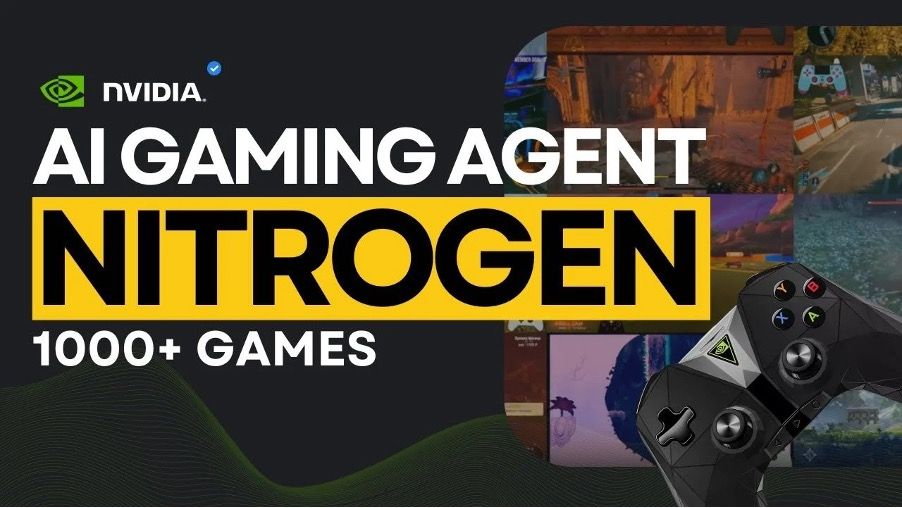
Nvidia and Stanford University released NitroGen, an open-source AI that can play more than 1,000 video games. Instead of learning one game at a time, it was trained on around 40,000 hours of gameplay videos from YouTube and Twitch. By watching humans play, NitroGen learned controls, strategies, and reactions. What’s impressive is that it also performs well in games it has never seen before.

This shows real progress toward general gaming AI instead of game-specific bots. Because NitroGen is open-source, developers and researchers can improve it freely. That could speed up innovation in gaming AI a lot.

Max's Opinion

This is insane because the AI learns games like humans do. I like that it’s open-source and not locked behind a company. It makes AI in gaming feel exciting.

GPT Image 1.5: Pixels Patches and Polish

GPT Image 1.5: Pixels Patches and Polish

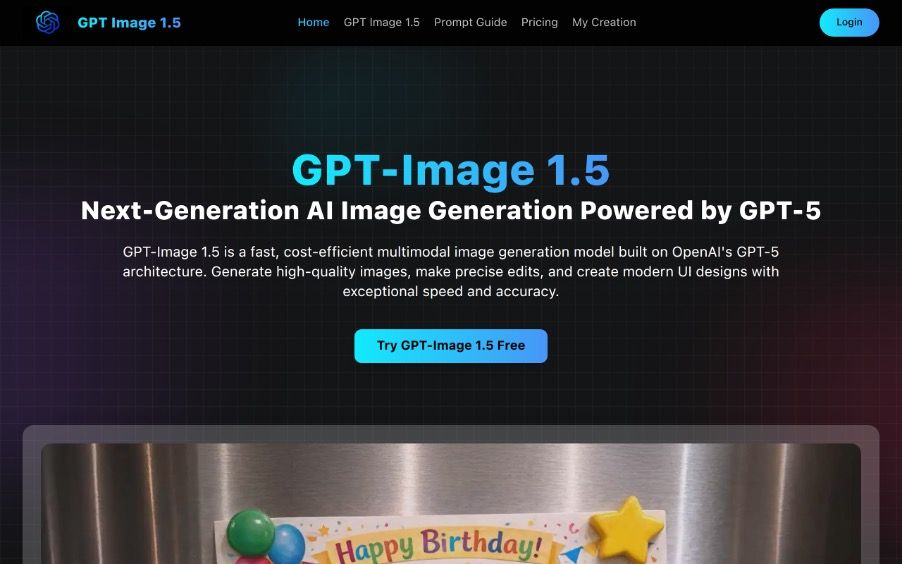
OpenAI released several updates that improve how ChatGPT handles images, coding, and daily use. With GPT Image 1.5, images are generated faster, look sharper, and handle lighting, details, and even text much better. OpenAI also upgraded Codex, making it stronger for long and complex programming tasks like refactoring. On top of that, ChatGPT got usability features like writing blocks, pinned chats, and personalization options.

These changes might not sound dramatic, but they make ChatGPT feel more polished and reliable. Instead of focusing on big promises, OpenAI is improving the small things people use every day. This makes the tool more practical for school, work, and creative projects.

Max's Opinion

I like these updates because everything feels smoother now. Faster images and better text help a lot with school stuff. It feels more finished and less experimental.

Disney’s Billion-Dollar AI Move

Disney’s Billion-Dollar AI Move

Disney announced that it’s investing $1 billion into OpenAI and signing a three-year licensing deal that lets people create AI-generated videos and images using over 200 characters from Disney, Pixar, Marvel, and Star Wars. These creations will be made using tools like Sora and ChatGPT Images, which shows that Disney is no longer just watching AI from the sidelines. What makes this even crazier is that just a day earlier, Disney had sent Google a cease-and-desist letter over large-scale copyright issues.

This move shows a big strategy change: instead of fighting AI everywhere, Disney is choosing to license its content where it makes sense. One major issue with AI is that it can basically memorize famous characters, which creates legal risks—often called the “Snoopy problem.” By licensing its characters, Disney turns a legal headache into something officially allowed. On top of that, Disney is becoming a premium data partner at a time when AI companies are running out of high-quality training material. Its huge character library is now a powerful asset, not just something to protect.

Max's Opinion

I honestly think this is a smart move by Disney because AI isn’t going away anytime soon. Instead of blocking everything, they’re making money and staying in control at the same time. For people my age, it also feels more natural since we already use AI a lot and want to see familiar characters in it.

ByteDance Beats the Benchmark

ByteDance Beats the Benchmark

ByteDance released a new AI video model called Vidi2, and it’s beating some of the strongest AI systems on video understanding benchmarks. The model is especially good at understanding what’s happening across time in videos, finding specific moments, and answering questions about video content. What makes this impressive is that it combines several skills—like tracking objects, understanding scenes, and answering questions—into one system instead of separate tools.

Vidi2 outperformed competing models on multiple benchmarks, especially when it comes to understanding motion across frames and quickly finding very short video moments. It can handle videos ranging from just a few seconds up to half an hour, which makes it useful for real-world applications. Because of this, the model isn’t just for research but also fits professional workflows like video editing, automatic camera switching, and tracking characters across scenes. Overall, it shows how fast video-focused AI is improving.

Max's Opinion

This is really impressive because video is way harder to understand than images or text. If AI can actually understand what’s happening in a video, that’s a big deal. It feels like this could change editing, content creation, and even how we search videos.

Trump's Genesis Mission

Trump's Genesis Mission

U.S. President Donald Trump signed an executive order launching the "Genesis Mission," a massive national project designed to speed up scientific discovery using AI. The idea is similar to the Manhattan Project, but instead of weapons, it focuses on science and technology.

The U.S. government wants to combine powerful supercomputers, huge federal datasets, and AI agents to automate research and test scientific ideas faster than humans alone could. This would all run on existing government research infrastructure.

Department of Energy Leadership

The Department of Energy will be in charge of building the platform, connecting national labs, universities, and approved private companies. The plan moves very fast: within a few months, officials must identify major scientific challenges and quickly show real results.

Key Research Areas

These challenges include areas like biotech, nuclear fusion, quantum computing, semiconductors, and advanced manufacturing. Strict cybersecurity rules are meant to protect sensitive research while still allowing collaboration.

Overall, the project shows how seriously the U.S. is taking AI as a strategic tool for science and national security.

Max's Opinion

This feels huge, like the government is finally treating AI as something super important. It's kinda crazy how fast they want results. If it works, it could speed up science a lot, but it also feels very intense.

ElevenLabs’ Platform Play

ElevenLabs’ Platform Play

ElevenLabs, best known for realistic AI voices, is now expanding into images and video with a new Image & Video platform (currently in beta). Instead of building everything from scratch, ElevenLabs connects top image and video models like Sora, Veo, and Kling into one unified workspace.

The idea is to let creators generate visuals, add AI voiceovers, include music, and layer sound effects all in one place. This turns ElevenLabs from a voice tool into a full content creation platform.

Unified Workflow

What makes this move strong is the workflow focus. Users don't need to jump between different apps for images, video, and audio anymore. Everything happens inside one timeline, from the first idea to the final export.

Targeting Creators

By targeting creators, marketers, and content teams, ElevenLabs is positioning itself as a serious alternative to using multiple separate tools. It's less about having the best single model and more about making creation faster and smoother.

Max's Opinion

This is actually really cool because switching between tools is annoying. Having video, images, and voice in one place just makes sense. For creators, this could save a ton of time.

ChatGPT Grows a Personality

ChatGPT Grows a Personality

OpenAI released GPT-5.1, an update that makes ChatGPT feel smarter, warmer, and more adaptable depending on the situation. The new version can adjust how much it thinks before answering, so it responds quickly to simple questions but takes more time on harder ones.

This makes answers clearer and more accurate, especially for math and coding, while still feeling fast in normal conversations. On top of that, OpenAI added detailed controls that let users change ChatGPT's tone and style.

Personality Presets

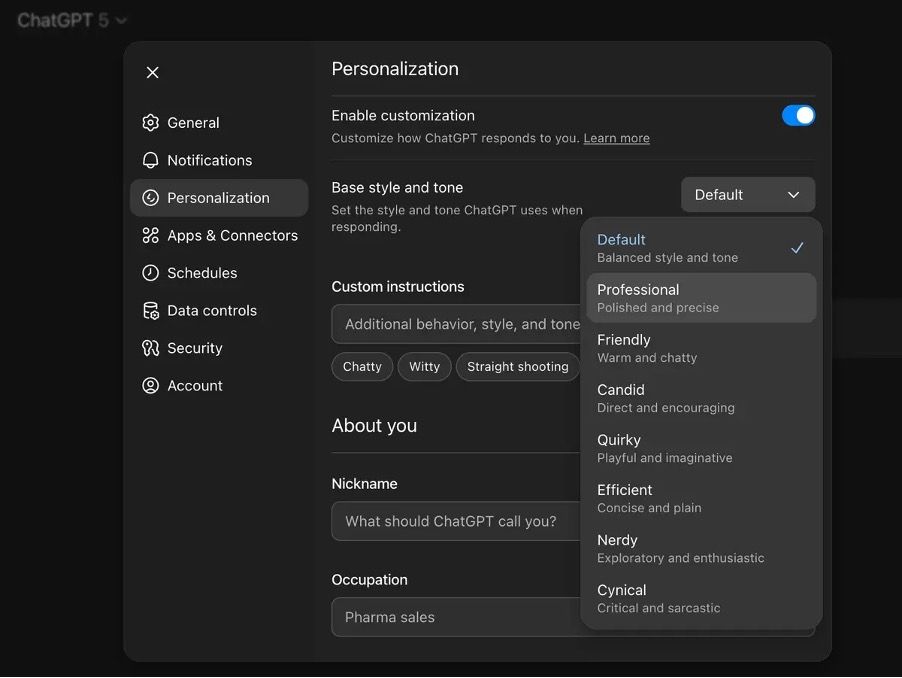
One big change is that ChatGPT now has different personality presets like Professional, Friendly, or Quirky, which affect how it talks across all chats. This directly responds to feedback that earlier versions felt too cold or robotic.

More Human Communication

By combining smarter reasoning with personality controls, ChatGPT feels more human and easier to use. It's less about raw intelligence now and more about how the AI communicates with people.

Max's Opinion

I really like this update because ChatGPT finally feels less robotic. Being able to choose the tone makes it way nicer to use. It feels more like talking to a real assistant instead of a machine.

Google Goes Orbital

Google Goes Orbital

Google revealed Project Suncatcher, a long-term project that explores building AI infrastructure directly in space using solar-powered satellites. The idea is to use satellite constellations equipped with Google's TPUs and fast optical links to process data in orbit instead of on Earth.

This sounds extreme, but it makes sense when you realize how much energy the Sun produces and how much more efficient solar panels can be in space, where they get constant sunlight. Google is basically testing whether space could become the next place for massive data centers.

Proven Technology

Google has already tested key parts of this idea, including TPUs that survived intense radiation and satellite-to-satellite communication speeds fast enough for serious data transfer. Two prototype satellites are planned to launch by early 2027 in partnership with Planet to test how well everything works in orbit.

The Future of Computing

If launch costs continue to fall, space-based AI infrastructure could eventually cost about the same as Earth-based data centers. That would completely change how and where computing happens in the future.

Max's Opinion

This sounds crazy, but also kind of genius. If space really gives unlimited solar power, it makes sense to put big computers there. It feels like sci-fi turning into real life.

Grammarly's Superhuman Rebrand

Grammarly's Superhuman Rebrand

Grammarly made a pretty unusual branding move by renaming its parent company to "Superhuman" after acquiring the email app with the same name. Instead of fully absorbing the Superhuman brand, Grammarly flipped the structure and made Grammarly itself a product under the Superhuman umbrella.

It's a confusing change at first, but also a bold one that shows the company wants to be seen as more than just a grammar checker.

Superhuman Go: The AI Assistant

Along with the rebrand, Grammarly launched an AI assistant called Superhuman Go, which connects to tools like Gmail, Google Drive, Calendar, and Jira. The idea is that the AI understands what you're working on and helps you write better while also automating small tasks, like logging tickets.

Competing with the Big Players

With earlier acquisitions like Coda and Superhuman, Grammarly is now building a full productivity suite instead of just a writing tool. This puts it in direct competition with platforms like Notion and Google Workspace.

Max's Opinion

I think the rebrand is kinda confusing, but it makes sense long-term. Grammarly doesn't want to be seen as just a spellchecker anymore. If the AI really helps across apps, this could be pretty useful.